Your current location: Home > Vision Solutions > sgi_ind_1.0
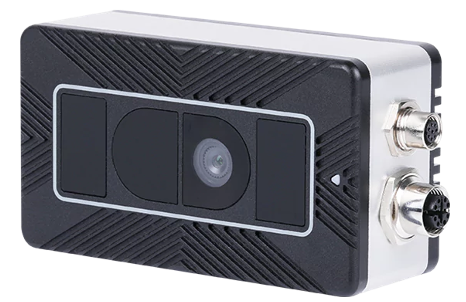
sgi_ind_1.0 is a vision solution designed for industrial safety scenarios, leveraging ToF depth cameras and 3D vision technology to deliver electronic fencing, safety zoning, protective interlocks, and localized event tracing capabilities.
sgi_ind_1.0 is engineered to meet the safety requirements of industrial environments. By capturing stable three-dimensional spatial information through ToF depth cameras and integrating AI vision with rule-based engines, it enables hazardous area monitoring, personnel intrusion detection, and event-driven联动. Compared to traditional 2D solutions, it is better suited for applications requiring spatial hierarchy assessment, distance judgment, and differentiation between humans and tools.
This solution supports common local deployment methods in industrial settings and can be integrated with Gigabit Ethernet, CAN, and I/O interfaces. It is ideal for integration into industrial control systems, security联动 systems, and projects requiring video archiving and process traceability. For industrial safety scenarios demanding higher reliability and lower false alarm rates, the 3D vision approach typically offers advantages over conventional camera modules.
| Sensor | Sony ToF sensor |
| Resolution | To: 640 × 480 (typical 15fps, max 25fps); RGB: 1280 × 960 (typical 15fps, max 25fps) |
| Field of View | To: H81° × V61°; RGB: H86° × V55° |
| Interface | Gigabit Ethernet / CAN / I/O |
| Power Supply | 24V DC (18V–30V) / 2A, average power consumption approximately 6.8W |
| Working Distance | 0.2–5m (90% reflectivity); 0.2–2.5m (10% reflectivity) |
| Wavelength | 940nm |
| Accuracy | ±3mm + 0.25% of depth |
| Dimensions | 92mm × 47mm × 51mm, approximately 449g, IP67 rated, passive cooling |
| System Support | Windows 7/10/11, Linux, Arm Linux / ROS, C/C++ / ROS SDK provided |
| Environmental Adaptability | Operating temperature: -20°C to 60°C; Storage temperature: -40°C to 85°C; Operating humidity: 20%–80% RH non-condensing; Supports 100Klux strong light environments |
sgi_ind_1.0 outputs depth maps, signal intensity data, and point clouds, and supports frame-interleaved HDR fusion to obtain more stable depth results. For scenarios requiring refined safety protection, the solution supports red, yellow, and green three-level safety zone configuration, as well as customizable protection heights and slopes based on on-site equipment and workstation layouts.
From a deployment perspective, this solution emphasizes local processing and local event retention, featuring automatic 10-second recording before and after hazardous event triggers. This makes it suitable for safety traceability, process review, and compliance documentation. Compared to approaches relying solely on 2D cameras, depth camera-based solutions are better at reducing false alarms caused by shadows, reflections, and background textures.
Q1: How should I understand the working distance and blind zone of sgi_ind_1.0?
The recommended operating range is 0.2–5m. The actual blind zone is affected by target reflectivity and optical power. Higher reflectivity results in larger near-field blind zones, while low-reflectivity targets require more attention to long-range signal attenuation.
Q2: Why is this solution more suitable than 2D safety protection solutions?
Because sgi_ind_1.0 acquires spatial distance information based on 3D vision and depth cameras, it can more accurately distinguish between humans, tools, and backgrounds. This makes it particularly suitable for industrial safety scenarios such as electronic fencing and hazardous area protection that require spatial judgment.
Q3: Does it support industrial and offline deployment?
Yes. The solution features Ethernet, CAN, and I/O interfaces that can联动 with PLCs, control systems, and site alarm devices. It also supports localized deployment and local video traceability.
If you are evaluating industrial safety protection, electronic fencing, or hazardous area intrusion detection solutions, please feel free to contact us. We can assist in determining whether sgi_ind_1.0 is suitable for your project based on installation height, protected area,联动 requirements, and site environment.
Phone: +86 18668087462 (WeChat available)
Email: contact@3dsensing.cn
Tel: +86 186 6808 7462
Email: contact@3dsensing.cn
Addr.: Bldg B2, Dongfang Chuangzhi Park,
Jinfang Rd, Suzhou Industrial Park, Jiangsu Prov.
 中文
中文 English



 苏公网安备32059002004738号